
Every pool in Central Florida eventually has the same conversation: the bugs, the leaves, the afternoon storms — and the neighbor's screened cage that seems to shrug all three off. The question is always what that cage actually costs. Here are the honest 2026 ranges we quote against in Orlando, what moves a project from the bottom of a range to the top, and when rescreening beats replacing.
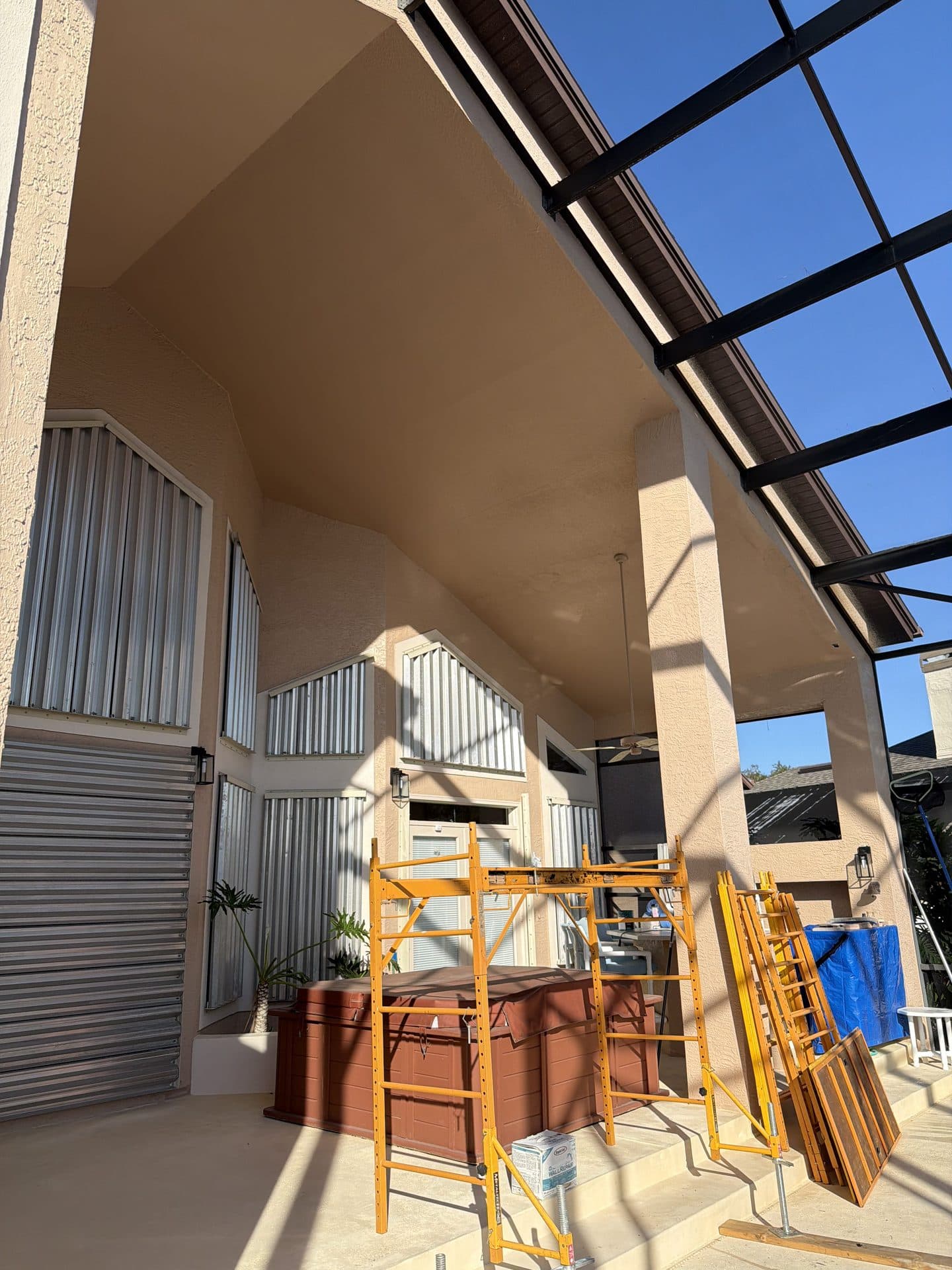
Pool Enclosure Cost Ranges in Orlando (2026)
- Standard pool enclosure (pool cage): $8,000–$20,000 depending on size
- Premium or oversized enclosure: $20,000–$40,000+
- Screened lanai (screen walls, no pool): $6,000–$15,000
- Lanai with a solid roof structure: $15,000–$35,000
Those brackets are wide on purpose — a cage is a custom aluminum structure sized to your pool deck, not a catalog item. The next section is what actually decides where in the bracket your project lands.
What Drives the Price
- Footprint and height. The square footage of deck being enclosed is the biggest factor, and tall designs (two-story screens, mansard or gabled tops) carry more aluminum and more engineering than a flat-top cage.
- Screen specification. Florida has a dedicated pool-and-patio mesh; tighter no-see-um mesh, pet-resistant panels, and privacy screen all price differently — and matter differently depending on how you use the space.
- Doors, kick plates, and hardware. Every door, chair rail, and kick plate is a line item. Most cages want at least two doors; oversized decks often take three.
- Engineering and wind load. Cages are engineered structures under Florida's wind requirements. Taller and more open spans need heavier framing members, and that shows up in the aluminum bill.
- Site condition. A clean existing deck with a sound footer is the easy case. Pouring or extending a footer, or tying into an existing roofline cleanly, adds real work.
Rescreening vs. Replacing
If your frame is sound and the screens are the problem, you likely don't need a new enclosure. Screen panels are the wear item — plan on rescreening roughly every 10–15 years — and panel-by-panel repair is often a manageable job. Replacement is the right call when the aluminum itself is failing: corroded fasteners, racked frames after storms, or an old cage that no longer meets wind code. If you're not sure which side of that line you're on, that's exactly what a site assessment settles.
Handy with tools? Panel-by-panel rescreening is a realistic DIY job — this guide covers pool cage, lanai and window screen repair including the pool-and-patio mesh spec and the barrier-code wrinkle.
Permits and Engineering
Pool enclosures require permits in Orange, Osceola, and Seminole counties, and the structure must meet Florida wind-load engineering. A contractor who builds cages regularly carries the engineering letter and pulls the permit in their own name as part of the price. A bid that skips permitting isn't cheaper — it's just leaving the risk with you.
Is It Worth It? Resale Math
In Orlando's market, a screened enclosure is close to standard equipment on pool homes — buyers expect it, and an open pool reads as maintenance. A well-maintained cage can add roughly $10,000–$20,000 in resale value, on top of what it saves you in chemicals, skimming, and pest control while you own the home.
Thinking Past the Cage
Two adjacent paths worth knowing about. If what you really want is an outdoor room — dining, shade, a TV wall — compare a cage against a screened lanai before committing: our pool enclosure vs. screened lanai guide walks the differences. And if the pool itself is past saving, enclosure money is sometimes better spent the other direction — we documented a full in-ground pool removal, stage by stage, so you can see what that looks like.
How to Get a Real Number
Ranges get you oriented; only a site visit prices your actual deck, heights, and tie-ins. Call (407) 634-4099 for a free phone consultation and we'll talk through your project — and if it warrants a full scope, our owner and his engineer walk the site with you.
Frequently Asked Questions
Do I need a permit for a pool enclosure in Orlando?
Yes. Orange, Osceola, and Seminole counties all require permits for pool enclosures and screened lanais, and the aluminum structure has to meet Florida's wind-load engineering requirements. A contractor who builds cages regularly handles the engineering letter and permit as part of the job — be cautious of any bid that leaves permitting to you.
Is it cheaper to rescreen or replace a pool cage?
If the aluminum frame is sound, rescreening is far cheaper than replacement — screen panels are the wear item, and a cage typically needs rescreening every 10–15 years in Central Florida. Replacement makes sense when the frame itself is corroded, storm-damaged, or under-engineered for current wind codes.
Does a pool enclosure add value to an Orlando home?
In the Orlando market a screened pool enclosure is close to expected on homes with pools — buyers treat an open pool as a chore and a screened one as an amenity. A well-maintained cage can add roughly $10,000–$20,000 to resale value, which is a meaningful share of what it costs to build.
What's the difference in cost between a pool cage and a screened lanai?
A basic screened lanai (screen walls on an existing slab or patio) generally runs $6,000–$15,000, while a full pool enclosure that spans the pool and deck starts around $8,000 and climbs with size and height. A lanai with a solid insulated roof structure is its own category at $15,000–$35,000.