
It is the question almost every remodel starts with: do I actually need a permit for this? The honest answer is “it depends on the work” — but the rules are more knowable than most homeowners think. This guide walks through who issues your permit in the Orlando area, what work needs one, who should pull it, and what it really costs you to skip it.
First question: which office even issues your permit?
Before “do I need a permit,” there is a question people get wrong all the time: which government issues it. The permitting authority is set by the property's jurisdiction — whether the parcel sits inside a city's limits or in unincorporated county land — not by its mailing address. A home with a “Kissimmee,” “Orlando,” or “Sanford” mailing address can actually sit in unincorporated county territory, which means the county, not the city, handles the permit.
The reliable way to know is a quick parcel lookup on your county Property Appraiser (Orange, Osceola, Lake, or Seminole) — the record shows the municipality that governs the property, or “unincorporated.” Here is where Central Florida homeowners in our service area go:
| If your home is in… | Your permit comes from |
|---|---|
| City of Orlando (inside city limits) | City of Orlando Permitting Services |
| Unincorporated Orange County | Orange County Building Safety (OC FastTrack) |
| Winter Garden | City of Winter Garden Building Division |
| Windermere | Town of Windermere Development Services |
| Ocoee | City of Ocoee Building Division |
| Apopka | City of Apopka Building Safety |
| City of Kissimmee (inside city limits) | City of Kissimmee Building Division |
| Unincorporated Osceola County | Osceola County Building Department |
| Clermont | City of Clermont Building Services |
| Unincorporated Lake County | Lake County Building Services |
| City of Sanford (inside city limits) | City of Sanford Building Division |
| Unincorporated Seminole County | Seminole County Building Division |
Not sure which one is yours? On a Karhan project we confirm the jurisdiction and pull the permit for you — see how our process works. Orange County homeowners can also use the free jurisdiction lookup on our DIYrr tool: which permit office covers your address — Orange County vs. City of Orlando.
What needs a permit — and what doesn't
The legal trigger comes from the Florida Building Code: you need a permit to construct, enlarge, alter, repair, move, or demolish a building, or to install, alter, or replace any electrical, gas, mechanical, or plumbingsystem. That one sentence explains most of the line between “permit” and “no permit.”
Work that generally requires a permit
- Additions and structural changes — bumping out a wall, removing a load-bearing wall, or anything affecting the home's structure.
- Moving or adding plumbing — relocating a sink, toilet, tub, or shower; new supply or drain lines.
- Electrical work — panel/service upgrades, new circuits, or added outlets.
- HVAC / mechanical — any permanently installed A/C or heating equipment.
- Water heater replacement (a plumbing permit, sometimes electrical too).
- Roofing — re-roofs require an in-progress inspection and a final.
- Windows, exterior doors, and garage doors — replacements need a permit, and the products must carry Florida Product Approval. Garage doors are Florida's single biggest hurricane weak point, so the approved product sheet has to be on site at inspection: the Orange County garage door permit rules, in detail.
- Pools and screen/pool enclosures, decks, concrete or paver driveways and pads, sheds and accessory structures, and taller or masonry fences.
Work that generally does not require a permit
Under the Florida Building Code, this finish-level work is exempt regardless of cost, as long as you are not moving plumbing or electrical or touching structure:
- Paint, wallpaper, and trim.
- Floor coverings — carpet, vinyl, tile, or wood over an existing subfloor.
- Cabinetwork — replacing or refacing cabinets in the same configuration.
- A countertop swap with no plumbing move, and simple decorations, shelving, gutters, and fascia/soffit.
- An appliance that simply plugs into an existing outlet.
One caveat worth repeating: permit-exempt is not code-exempt. Even work that skips the permit still has to comply with the Florida Building Code.
New for 2026: the under-$7,500 exemption
Florida's HB 803 (Chapter 2026-63) took effect July 1, 2026. On a detached single-family home, work valued under $7,500 can be exempted from permitting — and the local government must grant it. But the conditions matter more than the headline: you have to file a written request with cost documentation before the work starts, splitting one project into smaller pieces to get under the cap is prohibited, and it never covers electrical, plumbing, structural, mechanical, or gas work at any value, or any property even partially in a flood hazard area. Nobody inspects exempt work, so the county owes you no legal duty for it.
“Structural” is left undefined in the act, which is why windows, doors, garage doors, and roofing are still an ask-your-building-department answer. We walk through the request process and the exclusions here: how Florida's under-$7,500 permit exemption actually works.
Wondering about one specific small repair instead of a remodel — a water heater, garbage disposal, ceiling fan, or GFCI outlet? Our free DIYrr repair guides answer the Orange County permit question repair-by-repair, each sourced to the county's own pages.
What that means for the two most common remodels
Kitchens: swapping cabinets and counters in the same layout usually needs no permit — but the moment you move the sink, add circuits, or run a gas line, you do. Most full kitchen remodels cross that line. (More on scope in our Orlando kitchen remodel cost guide.)
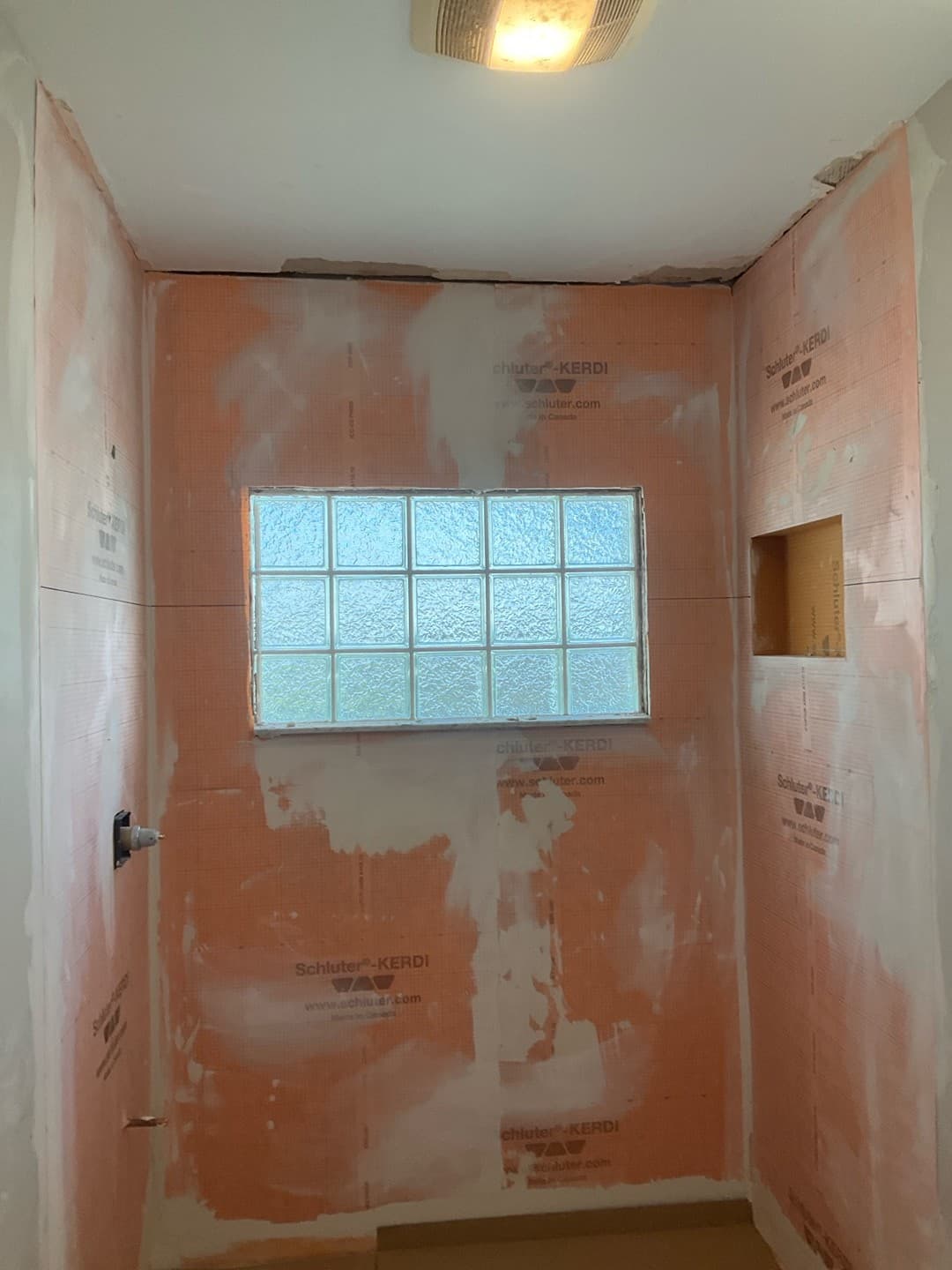
Bathrooms: a like-for-like finish refresh can be exempt, but relocating a toilet, sink, tub, or shower is a plumbing alteration that needs a permit — and since most bathroom remodels move at least one fixture, most need one. (See our bathroom renovation timeline.)
How the permit process works
Across Central Florida jurisdictions the flow is broadly the same, and today it is almost entirely online:
- Application & plans submitted to the building department (electronically in Orange County via FastTrack, and through each city's portal).
- Plan review — the reviewing agencies check the drawings; structural work needs plans signed and sealed by a Florida architect or engineer.
- Permit issues, then any sub-permits (electrical, mechanical, plumbing, gas, roofing).
- Notice of Commencement — Florida requires one recorded for any project over $5,000 before the first inspection.
- Inspections at the required stages as the work progresses.
- Final inspection — a passed final is mandatory to close the permit. New additions get a Certificate of Occupancy; alterations typically get a Certificate of Completion.
How long does it take? That depends on the jurisdiction and the scope, and it is the number to confirm with your building department up front. As published examples: the City of Orlando advises allowing about two business days for each review cycle, and Orange County notes approved documents are usually available within a few hours of approval. A simple like-for-like permit can move quickly; a structural addition that needs engineered drawings and multiple review cycles takes longer. We give every client a realistic permit timeline for their address and project before work begins. For the stage-by-stage walkthrough of what happens once the application is in — correction cycles, the Notice of Commencement, the inspection sequence — see our Orange County permit-process guide.
Who should pull the permit — you or your contractor?
When a licensed contractor pulls the permit, they do it under their own license and become the responsible party of record — the bonded, insured, code-accountable professional whose name is on the job.
Florida also allows an owner-builder permit: you can act as your own contractor on your own one- or two-family home. It sounds like a way to save money, but the trade-offs are real. As the owner-builder you:
- become legally and financially responsible for the project;
- must provide direct, on-site supervision yourself, and cannot legally hire unlicensed people to do the work for you;
- can be held liable for injuries to anyone working on your property; and
- trigger a one-year resale presumption — if you sell or lease within a year of finishing, the law presumes you built it to sell, which can void the exemption and count as unlicensed contracting.
You do not have to take our word for it — Florida's own owner-builder disclosure tells homeowners they can protect themselves from that financial risk by hiring a licensed contractor and having the permit filed in the contractor's name instead. That is how a Karhan project is set up: the permit is filed in the licensed contractor's name rather than yours, and we coordinate the applications and meet the inspector on site, so you never have to become the general contractor of record for your own home.
One scope note: everything above is about remodeling your own home — the owner-builder path is a residential allowance. Commercial build-outs and tenant improvements answer to a different set of rules on permits, license classes, and who may legally do the work; that side is covered in our guide to vetting a commercial general contractor in Orlando.
Three Florida realities that surprise people
1. Everything is built to a hurricane wind load. Central Florida is not in the High-Velocity Hurricane Zone (that is only Miami-Dade and Broward), but homes here are still engineered to hurricane-force wind loads, and exterior products like windows, doors, and roofing must carry Florida Product Approval. The exact wind-load figures are set per address by the code.
2. Structural work needs an engineer. Additions, removing a load-bearing wall, and any change that affects structural stability require construction documents signed and sealed by a Florida-registered architect or engineer. That is not red tape — it is what keeps the roof over your new open-concept space up.
3. HOA approval is separate from — and in addition to — the permit. If you live in an HOA community (much of Windermere, Winter Garden, Dr. Phillips, and Lake Nona do), the association's architectural review and the government building permit are two independent approvals. Getting a permit does not satisfy the HOA, and vice versa — and starting exterior work without HOA sign-off can be ordered undone. Our Lake Nona new-build guide covers the architectural-review track in more detail — how it runs alongside the building permit, and what it means for a builder warranty.
What it actually costs to skip the permit
Skipping a required permit can feel like it saves time and money. It rarely does. The downside shows up as:
- Fines and liens. Florida code enforcement can levy up to $250 a day for a first violation and $500 a day for a repeat, and an unpaid fine order becomes a lien against your property that the local government can eventually foreclose on.
- Opening finished walls. Legalizing work after the fact usually means an after-the-fact permit and exposing the concealed plumbing, wiring, or framing so it can be inspected — tearing back into the work you just paid for.
- Trouble at resale. Known unpermitted work has to be disclosed, and it can stall an appraisal or a buyer's financing when a lender can't confirm a closed permit.
- Denied insurance claims. If a loss traces back to uninspected, non-compliant work, an insurer can deny the claim.
Not sure what your project needs?
Tell us what you want to build and we'll tell you honestly what it involves — jurisdiction, permits, and timeline included. Call (407) 634-4099 for a free phone consultation with our team.
Frequently asked questions
Do I need a permit to remodel a bathroom in Orlando?
If you are only swapping finishes — a new vanity in the same spot, new tile, a like-for-like tub or toilet — that cosmetic work is generally exempt. But the moment you move or add plumbing (relocating the toilet, sink, or shower), change electrical, or alter the layout, a permit is required. Because most real bathroom remodels move at least one fixture, most of them need a plumbing permit.
Do I need a permit to remodel a kitchen?
Replacing cabinets and countertops in the same layout usually does not require a permit. But relocating the sink, adding or moving electrical circuits, or running a gas line does — and most kitchen remodels involve at least one of those, so they typically require permits.
Can I pull my own permit as a homeowner in Florida?
Yes. Florida's owner-builder exemption lets you permit work on your own one- or two-family home. But you become the legally and financially responsible party, you must personally provide direct on-site supervision, you cannot legally hire unlicensed labor, and if you sell or lease within one year the law presumes you built it to sell — which can void the exemption. The statute itself notes you can protect yourself from that risk by hiring a licensed contractor and filing the permit in the contractor's name.
Does replacing flooring, paint, or countertops need a permit?
No. Under the Florida Building Code, floor coverings, painting, wallpaper, cabinetwork, and trim are exempt regardless of cost — as long as you are not moving plumbing or electrical or touching anything structural. One important caveat: permit-exempt work still has to meet code.
What happens if I remodel without a permit in Florida?
Code enforcement can issue a stop-work order and daily fines — up to $250 a day for a first violation and $500 a day for a repeat — that can become a lien on your property. When you sell, unpermitted work has to be disclosed and can derail the appraisal or the buyer's financing, and an insurer can deny a claim tied to uninspected work. Legalizing it after the fact often means opening finished walls so the hidden work can be inspected.
Do I need HOA approval in addition to a building permit?
Often, yes — and they are separate approvals. Your HOA's architectural review and the city or county building permit are two independent tracks; getting one does not cover the other, and many Central Florida communities require both before work starts.
Related reading
- How a Karhan remodel works — permits included
- How to choose a remodeling contractor in Orlando
- Home additions in Orlando
- How much does a home addition cost in Orlando?
Sources: Florida Building Code §105; Orange County Division of Building Safety; City of Orlando Permitting Services; Florida Statutes §489.103 (owner-builder), §553.79, and §162.09. Requirements vary by jurisdiction and change — confirm current rules with your local building department.