
If your kitchen cabinets are solid but dated, you don’t always have to rip them out. Refacing keeps your existing cabinet boxes and layout, but gives you brand-new doors, drawer fronts, and matching veneer on the visible sides — for a fraction of the cost of new cabinets. Here’s what it actually costs in Orlando in 2026, and how to know whether it’s the right call for your kitchen.
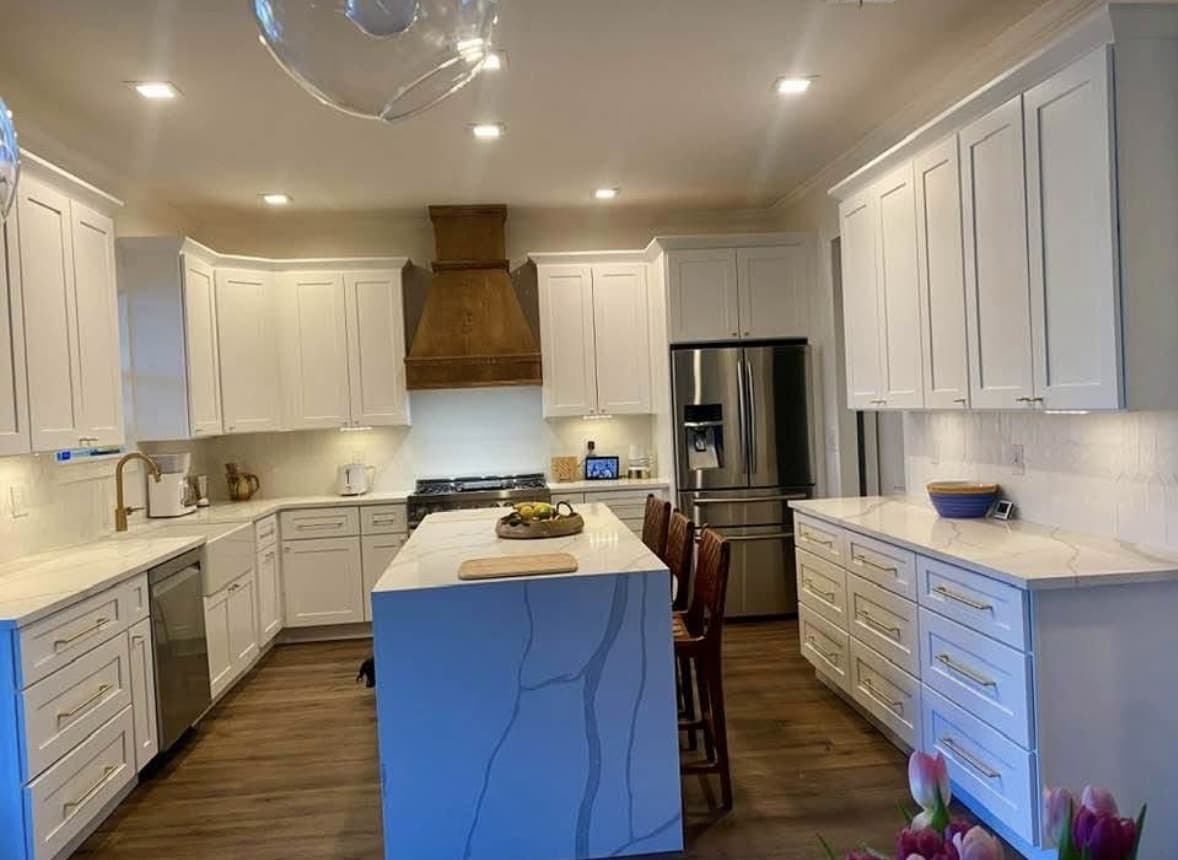
What Cabinet Refacing Actually Is
Refacing means we leave the cabinet boxes in place and replace or resurface everything you see:
- New doors and drawer fronts in your chosen style and color
- A matching veneer or laminate skin over the exposed box faces and end panels
- New hardware — hinges (usually soft-close), pulls, and knobs
The footprint, the boxes, and your countertops stay put. That’s the trade-off: refacing transforms how the kitchen looks without changing the layout or storage.
Average Cabinet Refacing Costs in Orlando
Based on kitchens we work on across Orlando, Windermere, and Winter Garden, here are the typical 2026 ranges for a standard 10×10 to 12×12 kitchen (roughly 25–30 linear feet of cabinetry):
| Refinishing / painting onlyExisting doors sanded, primed, sprayed | $2,500–$6,000 |
|---|---|
| Laminate refacingNew doors + high-pressure laminate skins | $4,500–$9,000 |
| Real-wood veneer refacingNew solid-wood or wood-veneer doors + wood skins | $9,000–$16,000 |
| Full cabinet replacementShown for comparison — new boxes, not refacing | $8,000–$35,000+ |
Based on a typical 25–30 door and drawer-front kitchen. Refacing only makes sense when the boxes are sound.
As a rule of thumb, refacing runs about $100–$150 per linear foot and lands around one-third to one-half the cost of new cabinets. If you like your layout, that’s a big saving.
What Drives the Price
1. Kitchen size (linear footage)
You pay by the running foot of cabinetry, so a compact galley costs far less than a big U-shaped kitchen with an island.
2. Door material and style
High-pressure laminate is the budget-friendly option that still holds up in Florida. Solid-wood shaker doors cost more but read as high-end. Glass inserts, slab vs. raised-panel, and specialty finishes all move the number.
One material we steer people away from here: thermofoil. If you get a refacing quote that says “thermofoil” or “RTF,” know that those are two names for the same product — a vinyl film heat-bonded to an MDF core — and “rigid” does not make it a tougher grade. It is usually the cheapest number on a bid sheet, and in Central Florida it is the one most likely to come back. See below for why.
3. Number of doors and drawers
Two people with the same size kitchen can pay different prices — more individual doors and drawer fronts means more pieces to build and hang.
4. Hardware and upgrades
Soft-close hinges and slides, new pulls, and add-ons like a pull-out trash cabinet or lazy-Susan retrofit add to the total.
Refacing vs. Refinishing vs. Replacing
Three different jobs that often get confused:
- Refinishing (painting) — cheapest. Keeps your existing doors; sands, primes, and sprays them a new color. Best when the door style still works and you just want a fresh look. Read more in our guide to cabinet styles for Florida homes.
- Refacing — the middle path. New doors and fronts, same boxes. Best when the boxes are solid but the door style is dated.
- Replacing — the most expensive and most flexible. New everything, and the only option if you want to change the layout, add storage, or the boxes are damaged. See our full kitchen remodel cost guide.
When Refacing Is the Right Call
Refacing makes sense when:
- Your cabinet boxes are structurally sound and dry (no swelling, water damage, or crumbling particleboard)
- You’re happy with the current layout and storage
- You mainly want a cosmetic transformation — new color, style, and hardware
It’s not the right move if you want to move cabinets, add an island, gain storage, or if the boxes have taken on moisture — a real concern in Florida kitchens under leaky sinks. In those cases the money is better spent on replacement.
Worth checking before you decide: if the complaint is really that doors sag, rub, or won’t stay shut, that is usually a hinge adjustment rather than a refacing job. Concealed European hinges adjust on three axes — and the height adjustment lives on the mounting plate, not the hinge, which is why people conclude the doors are beyond saving. A door that still droops after the cam hits its stop is normally under-hinged for its weight, not worn out. The adjustment order, the weight-to-hinge-count chart, and the boring-distance measurement to take before buying anything: adjusting cabinet hinges and replacing cabinet hardware.
Does Refacing Hold Up in Florida?
Yes, when it’s done on sound boxes and in the right material. Central Florida humidity is hard on cheap cabinetry, so three things matter: (1) the existing boxes are dry and solid before we start, (2) the doors and adhesives are rated for the job, and (3) you skip thermofoil.
High-pressure laminate holds up well in a Florida kitchen, and real-wood doors are fine as long as they’re properly sealed. Both are what we use.
Thermofoil — sold as “RTF” or “rigid thermofoil” — is the one to avoid. It’s a vinyl skin heat-bonded to a medium-density fiberboard core, and the bond has two enemies: heat and moisture. Cabinet manufacturers generally specify an indoor relative humidity of roughly 35–55%. Central Florida sits well above that for much of the year. Sustained moisture swells the MDF core, the adhesive lets go, and the vinyl bubbles and peels — starting at door edges and corners, and worst above a dishwasher or beside a range, where you also get concentrated heat. It is not a manufacturing defect; the material simply wasn’t designed for this climate.
We’ve seen it fail on five-year-old kitchens around Orlando, which is why we don’t quote it — refacing is only worth doing if it outlasts the payback. The same reasoning is in our guide to cabinet styles and materials for Florida homes.
Does It Add Resale Value?
Updated-looking cabinets are one of the first things Orlando buyers notice. Refacing gives you most of the visual impact of new cabinets at a fraction of the cost, which makes it one of the better dollar-for-dollar cosmetic upgrades before a sale — especially in a kitchen whose layout already works.
How to Get an Accurate Number
Refacing is priced off your actual linear footage, door count, and material choice, so a real quote starts with a measure. We offer free phone consultations throughout Orlando and Central Florida and can tell you quickly whether refacing or replacing is the smarter spend for your kitchen.
Refacing or Replacing? Let’s Figure It Out.
Call us at (407) 634-4099 or visit our Kitchen Remodeling page for a free phone consultation.