
College Park is one of Orlando's most rewarding neighborhoods to remodel — and one of the least forgiving to get wrong. The oak-canopy streets off Edgewater Drive are lined with homes built largely from the 1920s through the 1950s: Craftsman bungalows, Colonial Revivals, and mid-century ranches, each with decades of updates layered on top. Working on a pre-war College Park home is nothing like working on a new build. Here's what a homeowner should understand before starting.
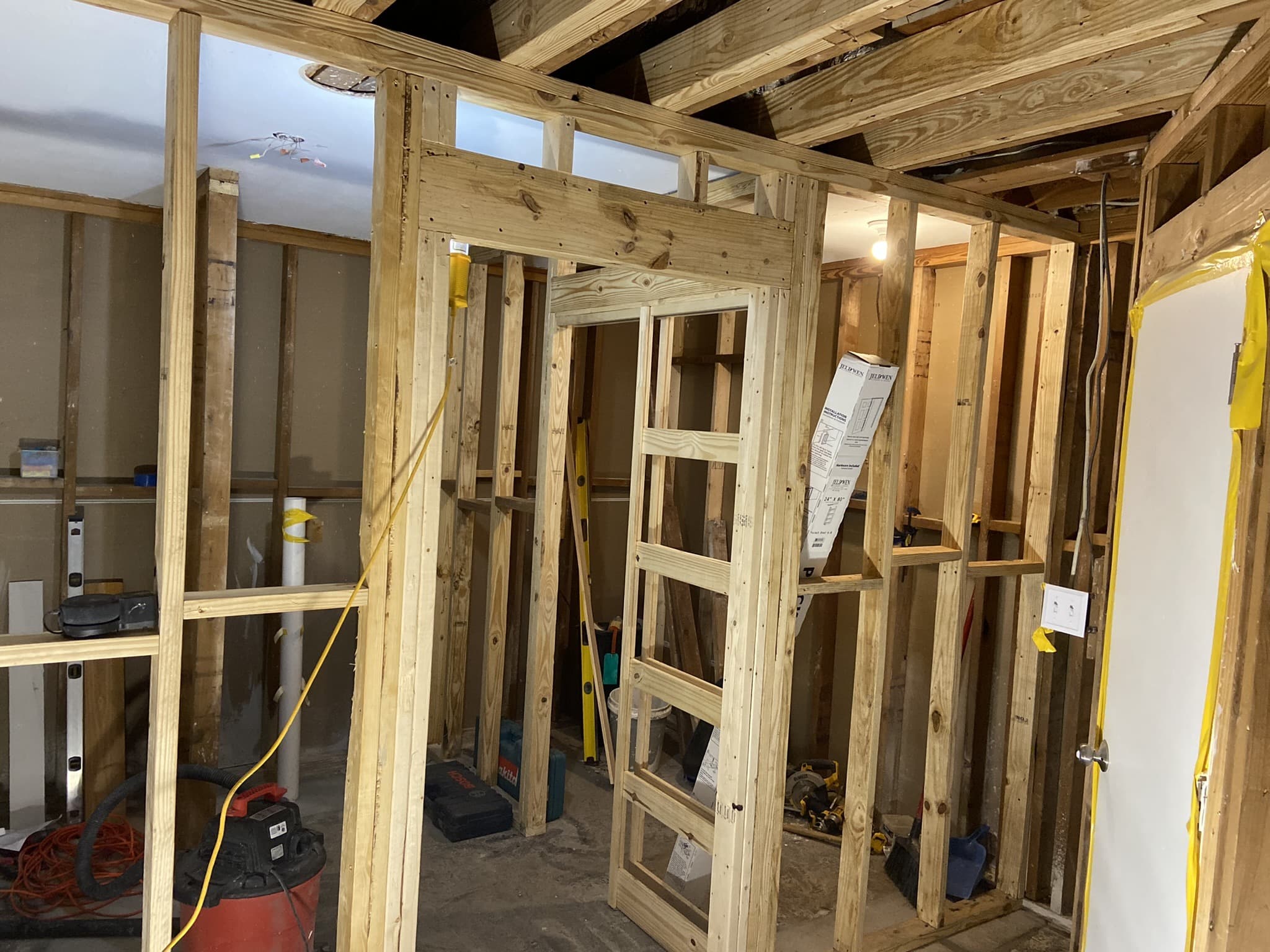
What's actually behind the walls
The single biggest difference between a College Park bungalow and a newer home is what you find once you open it up. In homes of this era you can commonly expect some mix of:
- Older wiring — knob-and-tube or cloth-insulated wiring, often on a 60- or 100-amp panel that's undersized for modern loads.
- Aging plumbing — cast-iron drain stacks and galvanized-steel supply lines that corrode from the inside and are frequently near the end of their service life.
- Plaster-and-lath walls rather than drywall — heavier, more brittle, and less forgiving to cut into.
- Single-pane wood windows, original trim, and heart-pine floors — often repairable, and often worth repairing.
- Foundation and subfloor conditions that vary by house and era, and occasional moisture or wood rot that only shows itself once a wall or floor is opened.
None of this is a reason not to remodel — these homes are built from materials you can't buy anymore. But it's the reason a bungalow project needs real discovery before a firm price, not a number sight-unseen.
The cast-iron drain line is the one worth understanding before you get quotes, because Florida's plumbing code will not let you line a pipe that has already failed — a camera survey has to come first, and the code official reviews the video before the permit is issued. We break the whole decision down here: cast iron drain pipe failure, relining vs. replacement, and what Florida code requires.
Two hazards to plan for: lead paint and asbestos
Homes built before the late 1970s and early 1980s can contain two materials that change how the work has to be done — and this is where hiring the right contractor matters most.
Lead paint (pre-1978 homes)
If your home was built before 1978, assume it may have lead-based paint. Under the EPA's Renovation, Repair and Painting (RRP) Rule, any firm you pay to disturb painted surfaces in a pre-1978 home must be EPA Lead-Safe certified, with a Certified Renovator on the job and lead-safe containment practices in place. This isn't optional and it isn't bureaucratic box-checking — lead dust from sanding or demo is a genuine health hazard, especially for young children. Ask any contractor you're considering for their EPA firm certification. A pro who works on pre-war homes will have an answer ready.
Worth knowing where the rule lands on work you do yourself: EPA states the RRP Rule generally does not apply to homeowners in their own pre-1978 home — but it does if the property is a rental — and the regulation names the window sill specifically as where friction-surface lead dust collects, which is why original windows are the highest-risk surface in the house. The details, including the heat-gun temperature cap and the 6-square-foot minor-repair threshold, are here: freeing a painted-shut window safely, and the lead-paint rules that apply.
Asbestos (older building materials)
Asbestos was used in a range of building products into the 1980s and can turn up in a College Park home's original 9×9 floor tile and the black mastic under it, “popcorn” ceiling texture, pipe insulation, and some siding and roofing. Intact and undisturbed, it's generally not a hazard; the risk comes from cutting, sanding, or tearing it out. The safe path is to test suspect materials before disturbing them and use a licensed abatement contractor if it's present — which we factor into the plan on any older home.
One correction worth having before you call anyone about a popcorn ceiling: EPA's own guidance is that taking the sample yourself is not recommended, since collecting a chip disturbs the exact material in question. Florida also licenses abatement, and the homeowner exemption is narrower than most people assume — it requires the home be owner-occupied and not for sale or lease, so prepping to sell does not qualify. Full timeline and rules: popcorn ceiling removal and the asbestos question, with Florida's licensing rules.
Permits & approvals: the good news for College Park
A common worry we hear is whether College Park's age means extra layers of review. It doesn't. College Park is not one of the City of Orlando's designated historic preservation districts. Orlando has exactly six — Downtown, Lake Cherokee, Lake Copeland, Lake Eola Heights, Lake Lawsona, and Colonialtown South — and College Park is not among them. That means a College Park remodel does not require a Certificate of Appropriateness or a trip before the Historic Preservation Board.
What you do need is the standard set of City of Orlando building permits — College Park sits inside Orlando city limits, so permits run through City of Orlando Permitting Services. Our Orlando permit guide walks through exactly what needs a permit and what doesn't. (If your home happens to sit inside one of the six designated districts, that's a different process — and one we handle too.)
What to save, and what to modernize
The art of a good bungalow remodel is knowing the difference between the character you keep and the systems you quietly bring into the 21st century.
- Save: original heart-pine floors (refinish over replace), repairable wood windows and their trim, period doors, and the front-elevation streetscape that makes College Park what it is.
- Modernize: the wiring and electrical panel, the supply and drain plumbing, HVAC, insulation, and — critically in Florida — the waterproofing behind any tile in a kitchen or bath.
The most-requested College Park kitchen project is opening the wall between a small, closed galley kitchen and the dining room while preserving the period detail everywhere else. On baths, the story behind the tile is usually bigger than the tile itself — see a real College Park bathroom rebuild we documented, wood rot and all.
What it costs
Pre-war homes carry a little more uncertainty than new construction because of what's behind the walls, so a realistic budget includes a contingency for what discovery turns up. For ballpark ranges by project type, start with our 2026 Orlando remodeling cost guide, then the room-specific breakdowns for kitchens and bathrooms.
Thinking about a College Park project?
We'll walk your home, tell you honestly what we expect to find behind the walls, and give you a fixed-price plan. Call (407) 634-4099 for a free consultation with our team.
Frequently asked questions
Is College Park a historic district? Do I need special approval to remodel?
No. College Park is not one of the City of Orlando's designated historic preservation districts — there are six of those (Downtown, Lake Cherokee, Lake Copeland, Lake Eola Heights, Lake Lawsona, and Colonialtown South) — so a College Park remodel does not require a Certificate of Appropriateness or Historic Preservation Board review. You do need standard City of Orlando building permits, which a contractor pulls in their own name.
Do I need a lead-paint-certified contractor for my pre-war home?
If your home was built before 1978 and you're paying someone to disturb painted surfaces, yes — the EPA's Renovation, Repair and Painting (RRP) Rule requires the firm to be EPA Lead-Safe certified, with a Certified Renovator on the job and lead-safe work practices in place. Ask any contractor you're considering for their EPA firm certification. It protects your household from lead dust, and it's the law.
Can I keep my original heart-pine floors and wood windows?
Usually, yes — and usually you should. Original heart-pine floors can often be repaired and refinished rather than replaced, and original wood windows can frequently be repaired and weatherstripped. We save what can be saved and only replace what's genuinely beyond repair.
What's the most common surprise in a College Park bungalow?
It varies by house, but the usual suspects in homes of this era are dated wiring (knob-and-tube or cloth-insulated, on undersized panels), cast-iron drain lines and galvanized supply lines near the end of their life, plaster-and-lath walls, and moisture or wood rot found once a wall or subfloor is opened. None of it is unfixable — but it's invisible until the work starts, which is why discovery up front matters.
Related reading
- Home remodeling in College Park
- Remodeling a Windermere Home — the estate-and-new-build guide
- Do I need a permit to remodel in Orlando?
- What Orlando remodels cost in 2026
- A real College Park bathroom transformation
- Kitchen remodeling — the most common bungalow project
- Bathroom renovation — usually the second one
- Whole home renovation — when the systems all need replacing at once
Sources: City of Orlando Historic Preservation Districts & Historic Preservation Board; U.S. EPA Renovation, Repair and Painting (RRP) Rule. General guidance only — conditions vary by home; confirm specifics for your property with a contractor and your local building department.